
Car Rental for University Visits in Cairo, Egypt: Plan the Family Day
Choosing a university deserves attention, yet addresses, entrances and waiting can distract from the campus. Planning car rental with a driver for university visits in Cairo starts with the confirmed purpose and appointment, followed by a vehicle and return arrangement that suit the applicant and their family.
This guide turns a university confirmation into a transport plan for one or two campuses. It explains when a sedan may suit your group and when a van deserves consideration, while keeping transport separate from campus registration, admission decisions and the university’s own visitor procedures.
Contact Customer Service About Your Visit Send Your Itinerary on WhatsApp

Car Rental for University Visits: Start With Your Decision
Define the visit objective. Is this a first campus visit, an appointment, or a test of a future family journey? The answer changes the day. Exploration may allow flexibility; a test or interview fixes reporting time around which transport is arranged.
Write a short objective for each university instead of collecting as many names as possible. It might be seeing the study environment and asking about a programme, or delivering documents after confirming that an in-person submission is required. This separates necessary visits from remote tasks and leaves time to reflect between campuses.
A Family Visit Is Different From Daily Student Transport
The requirement here is private transport for a particular visit, rather than a student transport subscription or a university shuttle. Identify who travels at each stage, who returns and who stays on campus. A parent leaving early for another destination needs an additional movement discussed in advance.
If part of the purpose is testing a potential daily journey, take useful notes without treating one trip as a fixed measure for every day. Traffic, access conditions and departure times vary. A driver executes the agreed journey; the family evaluates the university, course and accommodation using educational sources.
Confirm the University Visit Before Confirming the Car
A map address does not establish unrestricted visiting hours. Check its official visitor page or the confirmation from the person organising your visit. Establish whether the applicant and accompanying relatives must register, and what identification or documents the university requests. Share necessary journey information, keeping sensitive application details separate.
For example, the American University in Cairo campus tours page states that a tour requires advance registration. This is a university visit procedure, rather than something supplied by the car operator. Do not extend it into a single rule for all institutions, and do not rely on an appointment saved from an older visit without checking the current confirmation.
The Campus and Arrival Point Matter More Than the Name Alone
An institution may have several locations and visit types. Send the campus name, address and arrival instructions from your confirmation. Explain whether you are going to an admissions building, a testing centre or a separate site. Resolve conflicting map and university directions with the organiser before travelling.
Previous visits or old photographs do not confirm your entrance. Ask where passengers may be dropped off and collected. Permission for an applicant to enter does not automatically establish permission for the vehicle or driver to enter or wait. Plan around the actual permitted location and follow current security instructions and stopping restrictions.
A Campus Tour, Test or Interview: How Does the Journey Change?
A campus tour has a meeting point, a start and an expected finish. A test may have a separate reporting time, and accompanying relatives may not be admitted. An interview can have a known start without a precise end. Explain this so an estimated finish is not mistaken for confirmed collection.
Also ask whether an administrative task is separate from the tour. The family may need another building, another site or another day. Do not combine a tour, application and document submission into a single car itinerary before checking that these activities can actually be completed. When the applicant must attend alone, agree where the family will wait outside any restricted areas.
Allow for Arrival Without Relying on a Fixed Journey Promise
Start from the university’s required reporting time, then discuss departure using the real starting point and expected conditions. Reaching the surrounding district is different from reaching the meeting point. There may be a walk, an access check or a need to locate the correct drop-off. The useful allowance comes from the actual programme, rather than one number applied to every visitor.
When leaving a hotel, separate the time for leaving the room from the time everyone must be ready at the collection point. Prepare documents before departure instead of searching for them on the road. Check that the applicant has the visit confirmation and university contact details, and that the person coordinating the car has a charged phone available for any change.
Car Rental With a Driver in Egypt: A Transfer or Visit-Related Waiting?
You may need a journey to the university only, outward and return transfers at agreed times, or a car waiting during an agreed programme. These are different arrangements. State the requirement clearly rather than assuming the return or waiting is included. If the finish is uncertain, ask how collection would be coordinated and which changes require a fresh agreement.
The guide to a transfer or a time-based car booking explains the practical difference between defining one journey and defining the scope of use. Use it to prepare your questions, then discuss your actual visits through the car rental with a driver service in Cairo and Giza. The appropriate arrangement depends on the programme and confirmed details.
Rent a Car for a Family University Visit: Choose Function First
Begin with the number of passengers at every stage, followed by bags and any boarding needs. Application folders alone do not necessarily mean a larger vehicle is needed, while relatives travelling with suitcases may change the choice. Describe these details before requesting a specific model, so you are comparing vehicles against the same practical requirement.
A useful comparison asks where each person will sit, where bags will go and how often the group will get in and out between locations. A category name alone does not answer those questions. Mention children or anyone requiring assistance from the outset, then confirm suitability and any necessary equipment without assuming that a family-oriented vehicle automatically provides it.
Toyota Corolla Rental With a Driver for an Applicant and Companions
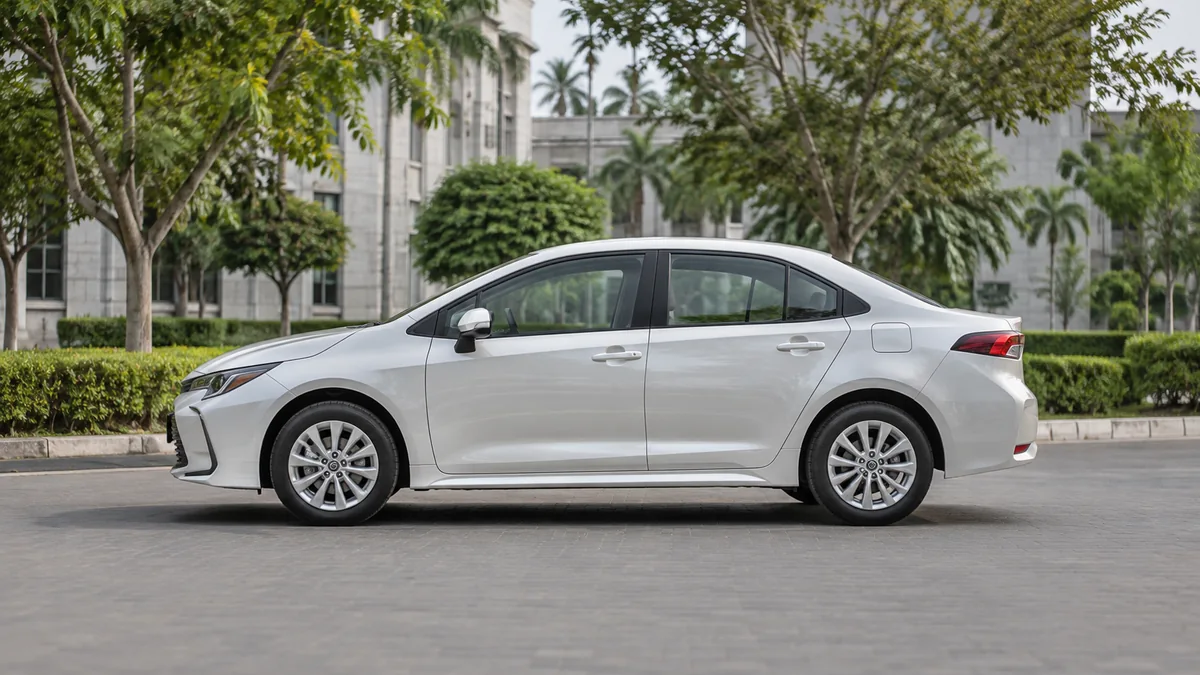
A sedan such as a Toyota Corolla may be worth considering for a smaller group carrying light bags, particularly when the plan is a straightforward arrival, one visit and a return. This is a starting point for discussion rather than a universal recommendation. The decision rests on your passengers and the space in the actual car offered for your date.
Discuss rear-seat access and the placement of folders and smaller bags. Documents should not interfere with anyone’s seating position or seat belt. If a relative leaves early or another person joins for the return, include that detail in the enquiry. The car needs to suit the complete day, rather than only the first journey out.
Rent a Mercedes With a Driver When You Prefer a Sedan

If a Mercedes is your preferred sedan, discuss it in terms of your group’s needs rather than assuming that the badge settles passenger or luggage space. When asking about a Mercedes C-Class or E200, request the details of the car being offered and check its suitability. Avoid applying specifications from another model year or market to the available vehicle.
Collect practical preferences before requesting a category. The applicant may want easy access, while a companion needs a suitable place for document bags. Describe these needs instead of asking only for comfort. Mention a preferred colour as a request needing confirmation, then discuss alternatives if your first choice is unavailable.
Mercedes Viano Van Rental for a Family: Check the Seat Configuration

A Mercedes Viano van may enter the discussion when more relatives join or the university visit is part of a trip with suitcases. However, the word van does not establish how many seats remain usable alongside your luggage. Check the actual configuration and bag placement first.
Passenger space also does not establish permission to enter every parking area or street. The drop-off remains subject to the location’s rules. If the applicant wants quiet before an interview, organise the family’s conversation and documents accordingly. The guide to choosing space for passengers and luggage is useful when the visit forms part of a longer journey or a change of accommodation.
A Short Comparison to Help Choose a Vehicle Category
| Your requirement | Option to discuss | Confirm before choosing |
|---|---|---|
| Applicant and companions with light bags | A sedan such as a Corolla | Passenger numbers and the actual car’s space |
| A preference for a Mercedes sedan | An available Mercedes | Category, model, access and luggage suitability |
| A larger family or travel luggage | A van such as a Viano | Seat configuration with the bags included |
| An uncertain finishing time | Any category that fits the group | Waiting scope, collection coordination and changes |
Turn your choice into a short journey card: collection and arrival points, passengers at each stage, bag placement and the person confirming family readiness. Keep university reporting, tour assembly and car departure separate, so three different times are not confused as one appointment.
Visiting Two Universities With a Driver: When Does It Make Sense?
Two universities being in the same city does not make the journey short or the appointments compatible. Confirm both visits and arrival points, then allow for leaving the first campus, travelling and entering the next. If the first tour has an uncertain finish, avoid placing a second appointment that cannot change directly after it without a realistic allowance.
Prioritise answers over the number of stops. List an exploratory stop as optional in the enquiry and add it to the confirmed itinerary only once agreed, or use separate days when appointments conflict. When adding a destination, discuss its effect on route and duration rather than assuming it is a minor change because the district sounds nearby.
Agree One Collection Point After Each Visit
Choose one person to coordinate the vehicle, particularly when family members split between a tour and an enquiry office. Give that person the correct meeting point outside restricted areas. Avoid directing relatives to different entrances in the expectation that the car will collect everyone through a movement that has not been arranged.
If the exit changes, communicate it as soon as you know and establish whether the car can reach it. A morning drop-off may not be a suitable waiting point later. It helps for the family to know the permitted alternative before the visit ends, while avoiding blocked traffic or reliance on a prohibited stopping place.
Waiting and Returning From the University: Define the Boundaries

Ask where the vehicle can wait and whether waiting follows an agreed duration or another coordination arrangement. A university having parking does not mean every private vehicle can use it. The American University in Cairo campus access guidance demonstrates that visitor entry is regulated. Confirm the details for your own visit and any vehicle access directly with the responsible university team.
Allow time for the family to gather, collect documents and reach the meeting point before the return. If a test or interview runs longer, contact customer service when the change becomes apparent and discuss what can be arranged under the booking and current availability. Do not plan around unlimited waiting or an automatic extension that has never been confirmed.
If the University Reschedules or Cancels the Visit
A university may send an update after the car has been arranged. Check the new date, time and campus before requesting a booking change. Distinguish a change of appointment from a change to the entire day’s scope: one visit could become two stops, or the family might need a different starting point. Sharing the relevant update avoids unnecessary assumptions.
Ask about the booking’s actual change and cancellation terms before confirming it. This guide does not establish a refund entitlement or a free transfer to another date. If the university appointment is uncertain at the enquiry stage, say so, so that you understand what remains to be confirmed rather than treating an unresolved arrangement as final for either party.
A Hypothetical Example: An Applicant and Family Visiting Two Campuses
Imagine a family with a confirmed tour at one campus and a proposed later visit to another. They begin by confirming both appointments with the universities, then recording the starting point, required arrival location and actual passenger numbers. Next, they discuss the car, route, waiting and return without assuming a fixed journey time between the two sites.
If the first tour finishes later, one person informs the transport coordinator while the family contacts the second university about its appointment. A vehicle cannot replace a missed academic appointment or confer permission to enter. If the visits no longer fit, separating them is more practical than rushing the applicant or depending on an unrealistic arrival promise.
Use the Return Journey to Organise Visit Notes
Before leaving each campus, ask the applicant to record what they actually saw and what still needs an answer. Separate impressions of buildings from understanding the academic programme. Keep notes in one file with the visit date and the office that answered, so information from two universities does not become mixed. Do not record people or photograph private documents without permission.
On the return, give the applicant time to collect their thoughts before pressing for a final decision. List remaining questions for the university. If another visit is needed, define its purpose from these notes, such as meeting a department or clarifying an unresolved point, rather than repeating the tour because the first day was crowded. This may call for a different appointment and arrival point.
Keep transport notes separate: the drop-off used, the walk to the meeting and how the family gathered afterwards. They can inform another visit but do not establish that access or parking conditions will remain unchanged. Neither the admissions decision nor accommodation choice should rest on one comfortable journey alone.
Prepare Your Enquiry for University Visit Car Rental
State the type and date of visit, starting point, required reporting time, campus and confirmed arrival location. Add passenger numbers, luggage and any additional stops. Explain whether you need a transfer only or waiting and return, and share the location details required for transport without sending sensitive information that the vehicle booking does not need.
I would like to enquire about a car with a driver for a university visit on [date], starting from [location]. We need to report at [time] at [campus and confirmed arrival point]. There will be [passengers] with [luggage]. We need [a transfer or waiting and return], with [any confirmed additional stop]. Could we review the available category, service scope, changes and the details required before confirmation?
After receiving a response, check that it matches the current itinerary, particularly the final destination, waiting and any expenses whose inclusion needs clarification. Keep the confirmation and day-of-visit contact arrangement available. Enquire on 01118974446 or customer service WhatsApp. Sending a message or selecting a contact link does not complete a booking without confirmation.
Conclusion: Let the Car Support the Purpose of Your Visit
Start with a confirmed visit and an accurate destination. Choose a vehicle for your passengers and bags, then define waiting, the return and how changes will be handled. These details make the day clearer for the applicant and family. Admissions, entry and campus arrangements remain with the university, while the car booking focuses on the transport that has been agreed.
Frequently Asked Questions About University Visit Car Rental
Does booking the car register the university visit?
Transport booking should not be treated as visit registration. Confirm the appointment, registration and accompanying visitors with the university or tour organiser, then give customer service the arrival details needed for the journey. This guide does not provide admissions services or establish an affiliation between the car operator and an educational institution.
Can the driver and car enter the campus with the family?
Do not infer that from the applicant’s permission to enter. Ask the university about vehicles, drivers and permitted drop-off and collection locations, then plan around its actual instructions. Collection may need to take place outside campus at a permitted location, without a promise that the car can wait inside.
Should I choose a sedan or a van for a university visit?
Compare passengers, luggage and boarding needs against the actual vehicle. A sedan may suit a smaller group, while a van can be worth discussing for more relatives or travel luggage. The category name alone establishes neither the right capacity nor availability, so confirm the seat configuration before choosing.
What if I do not know when the interview will finish?
Explain the uncertainty during the enquiry and agree how the return and waiting limits will work. Contact customer service when a change becomes apparent. Do not assume an automatic extension or open-ended vehicle availability; what can be arranged depends on the booking details and availability when the change is requested.
Can we visit two universities in one day?
You can discuss that programme after confirming both visits and reviewing the route and access time at each location. Not every pairing works. If the visits conflict or the first has an uncertain finish, separate days may offer a more useful experience than an overly compressed itinerary.