
Rent a Car in Egypt: Choosing Space for Passengers and Luggage
Start with passengers and luggage, before the model
If you want to rent a car in Egypt for a family journey or visiting guests, begin with a practical question: will the vehicle accommodate the people and their belongings at the same time? The model and its photograph help you imagine the journey, but they do not establish the luggage space available with every required seat in use, or whether a folded stroller and a large suitcase will fit.
A useful request combines the passenger list, bag sizes, additional items, route and planned stops. Ask for a suitable vehicle category, then review the actual vehicle before confirming. This guide explains how to prepare that request and assess the response without assuming fixed capacities for a model or treating an exterior photograph as a promise of usable space.
The examples are planning tools, rather than confirmation that a particular vehicle will be available on your date. Start with the chauffeur-driven car rental service in Cairo and Giza, then send your journey details for review.
Count every passenger on each leg
Write down the number of adults and children, including anyone joining at a later stop or leaving before the final destination. For a chauffeur-driven booking, ask how many passenger seats are available in addition to the driver’s seat. Do not rely on a total seating figure in a general vehicle description: a different interpretation of that figure can change the appropriate category.
If one person is booking for the family, they should check the headcount with everyone before sending the request. Include children explicitly rather than treating them as needing no space, and describe their seating needs early. If someone needs a particular seating position or extra legroom, explain the requirement and ask the booking team to confirm whether the actual available vehicle can accommodate it.
Build a luggage list that can be checked
Replace ‘a few bags’ with a list that someone can review: for example, two large suitcases, one medium case, two hand bags and a folded stroller. Separate items intended for the luggage compartment from small belongings you need within reach. Passenger seating, aisles and vehicle exits still need to remain usable; they are not spare luggage areas.
Photos and dimensions for bulky items
A photograph showing the items together can make the request clearer, especially when the bags have different shapes. Include approximate dimensions for bulky items when you know them, and mention rigid parts or protruding handles. If you have not finished packing, label the list as provisional and agree when you will confirm it before travelling, so the vehicle choice can be reviewed while alternatives may still be possible.
Why the number of bags is not enough
Three bags do not represent the same load on every journey. Rigid suitcases behave differently from soft bags, while a folded stroller can occupy an awkward shape that prevents another item from fitting beside it. The loading opening, compartment height and seating arrangement also affect what can be carried, even when an overall interior photograph looks spacious.
Ask for suitability to be checked against your list, rather than accepting a general statement that the boot is large. If the team sends a luggage-compartment photo, ask whether it shows the proposed vehicle with the seat arrangement required for your journey. Those details are more useful than comparing capacity figures whose measurement conditions you have not established, and help prevent an incomplete visual estimate from deciding the booking.
When a sedan makes sense
A sedan is worth considering when passenger numbers and luggage are limited, or when the plan is a straightforward city transfer with bags suited to its boot. However, choosing one because everyone can sit inside answers only half the question. Ask where all the luggage will go, especially if it includes large cases, a long rigid bag or purchases added before the return journey.
If you prefer a Mercedes, combine that preference with a practical space check. The C180 and E200 booking comparison can help you frame the model choice, but the proposed vehicle still needs to be assessed against your actual passenger and luggage list. A model name cannot replace that check.

Is an SUV always the roomier choice?
A taller body does not establish how much luggage space will be available. Some seating arrangements use additional seats at the rear, changing the luggage area when those seats are occupied instead of folded. The useful question is: what space remains when everyone is seated in the positions needed for this journey? Asking whether the vehicle is large or has a third row is not enough.
If your party needs every seat, do not base the decision on a photograph taken with seats folded away. Request the intended travel configuration, the proposed luggage arrangement and information about boarding access. Another category may suit the brief better even if it looks less imposing from outside. Assess the layout of the specific vehicle rather than assuming that the category name settles the issue.

Family vans and usable luggage space
A van may be worth discussing when more passengers travel with a varied luggage load, but the word ‘van’ does not promise a particular amount of space. The row arrangement, occupied seats and rear storage area all need to be checked on the proposed vehicle. Ask where bags will sit while passengers remain in their seats, and how any belongings needed at a stop can be accessed.
For a family-oriented option, the Kia Carnival family travel guide offers additional context before you confirm the arrangement available on your date. Do not assume that seats can automatically be removed or the cabin rearranged: that depends on the vehicle, its equipment and an agreed configuration suitable for the journey.

When to consider a larger vehicle or two cars
If the luggage does not suit your preferred vehicle, request a practical comparison between a larger category and two cars instead of squeezing the brief into an unsuitable choice. Compare driver arrangements, pickup locations, arrival coordination and the quoted cost of each option, together with actual availability. There is no single solution that fits every family or group.
Two cars may help when the party has different destinations or separate departure times, but each vehicle needs clear coordination and a designated contact. A larger vehicle may keep everyone together more conveniently if its seating, luggage space and route suitability have been confirmed. For needs beyond a family vehicle, review the group transport, minibus and coach rental service and ask which arrangement can accommodate the full brief.
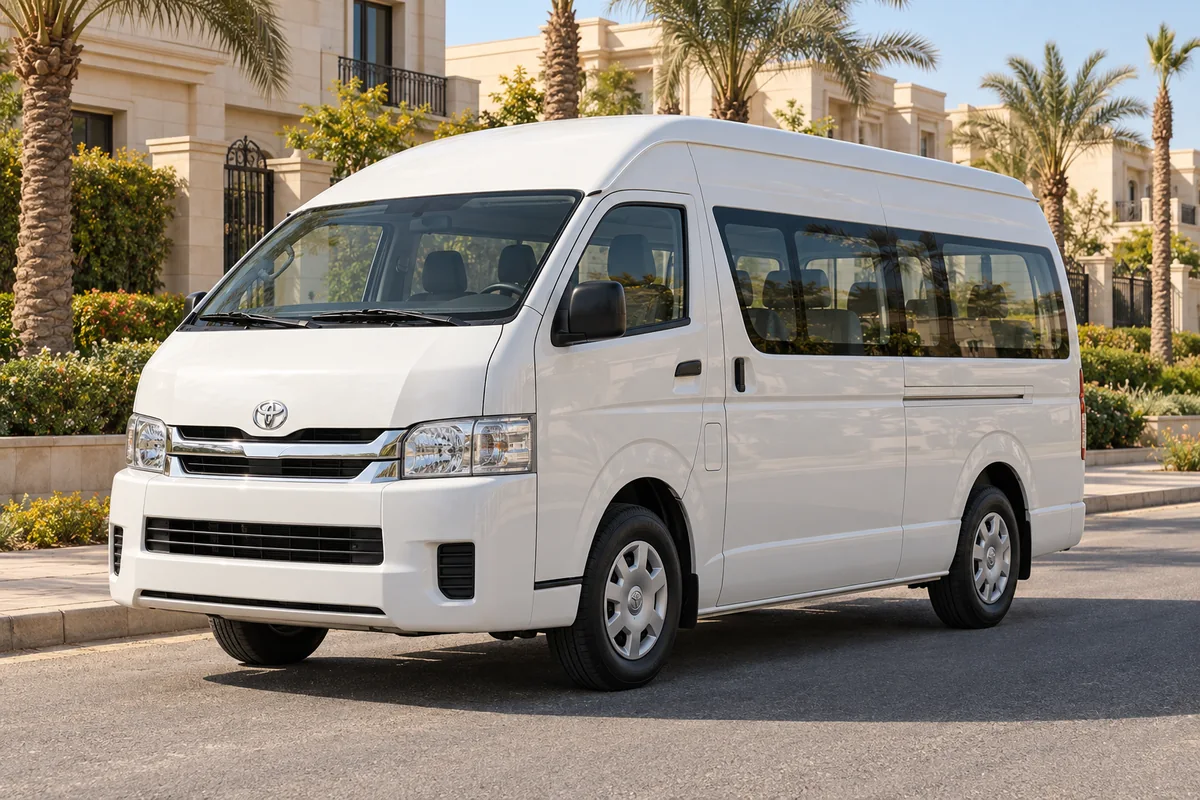
A comparison table for asking the right questions
The table below is a way to organise your questions, not a certified capacity chart or a promise that every vehicle in a category carries the same load. Start with the situation closest to yours, then submit the passenger and luggage list for a specific review. The useful comparison concerns how seating, storage and travel arrangements work together.
If an option appeals to you, ask why it suits your list before confirming it. The table does not remove the need to check the actual proposed vehicle, particularly when the load includes oversized cases or when a passenger has specific mobility requirements.
| Category to review | When to discuss it | Key question |
|---|---|---|
| Sedan | A relatively limited passenger and luggage load | Will the actual bags fit the luggage compartment? |
| SUV | Preference for a taller category, subject to layout review | What luggage space remains with all required seats in use? |
| Family van | A party needing a row and rear-storage assessment | Where will bags go without occupying passenger seats? |
| Larger vehicle or two cars | A load or destinations beyond the smaller option | How will people, luggage and timings be allocated? |
Children, strollers and child seats
A child adds several details to the booking request: age, seating needs, the stroller’s folded dimensions and the supplies you may need to reach during a stop. Ask whether an appropriate child seat can be provided and whether it is compatible with the vehicle. Do not assume one is included or available because the booking is for a family, and confirm a suitable installation arrangement before departure.
When you bring your own child seat
If you are bringing your own seat, say so and provide its details when needed, because it affects the seating arrangement. Check the stroller when fully folded rather than relying on a product photo showing it open. Identify any supplies bag you need during the journey so it is not packed behind everything else and requires unloading at each stop.
Access, boarding and mobility needs
If you are arranging travel for an older passenger, read our guide to renting a car for older passengers in Egypt to discuss seat preferences, the entry area, stopping points and boarding time alongside passenger and luggage space.
A vehicle may accommodate the bags while still being awkward for a passenger to board. Explain if someone finds high steps difficult, needs extra time to enter and exit, or uses a walker or wheelchair. Do not assume that an ordinary van is equipped to transport someone while seated in a wheelchair; that requires explicit confirmation of suitable equipment and service.
Distinguish between carrying a folded wheelchair as luggage and transporting its user while they remain seated in it. Ask about actual suitability and available equipment, and include folded dimensions if the chair will be carried with the bags. Agree an accessible meeting point as far as vehicle access restrictions allow, instead of relying on a broad address that could create an unnecessary walk.
Work bags, equipment and unusual items
Include items that are not ordinary travel bags: a rigid camera case, sample box, musical instrument, clothing that needs hanging space or long work equipment. An item can be only one piece yet occupy substantial space. Do not assume it can be stacked on top of the suitcases if it is fragile or needs a particular orientation.
Send dimensions and an approximate weight where relevant, and describe handling needs without sharing sensitive information unrelated to the booking. If transport suitability is uncertain, request a review before agreeing on the vehicle. Special packaging, handling or securing arrangements need separate confirmation. A passenger transfer should not automatically be treated as a freight service or a specialist equipment-moving service.
Plan for the return luggage from the start
The luggage you leave home with may differ from what you bring back. Allow for gifts, clothing or other purchases, and check whether the return has the same passenger count. A relative joining you or an extra suitcase can change the transport brief even if the route stays exactly the same.
Before the return date, send an update if the amount or shape of the luggage has changed and ask for the vehicle’s suitability to be reviewed. Do not wait for the driver to arrive to discover a mismatch. If you book both directions together, give separate lists when they differ and identify which leg needs more space. A different arrangement for each journey may be worth discussing, subject to availability and the agreed booking details.
Airport transfers and city outings have different needs
For an airport pickup, the luggage is part of the journey from the first moment. A city outing may begin without large bags but add purchases later. Describe the actual use rather than simply asking for an airport car or a day-out car. If you plan to transfer from the airport to a hotel and then take a city outing, describe these as separate stages so timings and requirements can be reviewed.
For a Cairo airport limousine pickup or drop-off, send flight details, destination, passenger count and luggage information. Confirm the meeting point and contact arrangement after arrival. Waiting, meeting inside the terminal and handling flight delays should not be assumed to have identical terms in every booking. Review them with the team; the right amount of vehicle space does not organise the arrival by itself.
Intercity travel needs a different review
An intercity journey makes seating comfort and luggage arrangement relevant throughout the trip, not only while loading. Say whether you need a one-way transfer or a return, whether the return is the same day or another date, and whether you want driver waiting time or a separately arranged transfer. These are items to request and confirm, rather than services to assume are included.
Discuss expected stops and belongings you may need during them, such as a child’s supplies or personal medication carried in a way appropriate for you. Provide the exact destination and any accommodation access requirements. The Cairo to Ain Sokhna family trip guide can help with wider planning, while the intercity transfer service is the place to confirm the arrangements for your actual route.
Worked example: a family with mixed luggage
Imagine a family of two adults and two children carrying two large suitcases, one medium case, a folded stroller and a supplies bag. The starting point is not simply to find four passenger seats. Send the complete list and ask which vehicle can accommodate it with a suitable seating arrangement for the children. Mention whether you will bring a child seat or need to ask about availability.
When you receive a recommendation, request a luggage-space check with the seats in the configuration you will use. Identify the supplies bag as something you need to access at stops. If space remains uncertain, discuss a larger alternative before confirming. This hypothetical example explains the decision process; it does not establish that this load suits every sedan or every van. Suitability belongs to the specific vehicle and arrangement.
Worked example: guests on separate flights
If guests arrive on two flights, list the passengers, luggage and scheduled arrival time for each flight separately. Ask about possible arrangements rather than automatically putting everyone into one vehicle. Separate transfers or another agreed plan may suit the timing, location and available vehicles. Schedule changes and open-ended waiting are not automatic parts of the request.
Designate a contact for each group and say whether everyone is going to one destination or several addresses. If you request a single vehicle for all guests, ask how the meeting will work and what happens to the arrangement if one flight is delayed. This keeps luggage capacity and timing as separate questions: a vehicle can be large enough while the overall pickup plan still needs to be changed before confirmation.
Useful vehicle photos and questions
A useful photo answers a specific question. Request a clear luggage-compartment image or an explanation of the seating layout if available, and ask whether it shows the proposed vehicle or merely an example of the category. Website images help you understand the options, but do not independently confirm the year, equipment, condition or storage arrangement available for your booking.
Review boarding doors, the loading opening and the rear-seat configuration, especially if a bulky item needs to enter in a particular orientation. If detailed photographs are unavailable, ask for a clear suitability confirmation based on the dimensions and list, or discuss an alternative that can be checked more confidently. An illustrative image is not evidence that a particular vehicle is available, and a different seat arrangement still requires confirmation.
What to confirm in the booking summary
Before finalising the arrangement, review a summary covering the date, pickup, destination, passenger count, luggage list, agreed category or model and additional requests. Ask what the quoted arrangement includes and how stops, waiting, route changes or timing changes are handled. Clarify any charges whose inclusion is unclear rather than assuming they are covered.
Special requests and vehicle changes
If you need a particular colour, child equipment or room for an unusual item, ask for confirmed requests to appear in the booking details. Discuss what happens if the proposed vehicle changes, so passenger and luggage requirements remain clear when an alternative is reviewed. Also ask for the amendment, cancellation and payment terms applicable to your request, rather than treating the examples in this guide as a fixed company policy for every booking.
A ready-to-send request for a suitable car
Copy and adapt this request: I need to rent a car with a driver in Egypt on [date], from [pickup] to [destination], for [one-way or return travel]. We are [number] adults and [number] children. Our luggage is [list with bag sizes], plus [stroller or additional items and dimensions]. We also need the following requirement reviewed: [specific request].
Please recommend a vehicle that suits the passengers and luggage together, confirm the passenger seats and luggage space in the required travel configuration, and explain what is included and the terms for waiting, stops and amendments. [Add flight details if relevant.] I can send luggage photos or dimensions if required. This is an enquiry, not a confirmed booking. Availability and details must be agreed by phone or WhatsApp. Do not include passport or payment information in the initial enquiry without a clear need and an appropriate agreed channel.
A checklist before departure
Before departure, check that the passenger and luggage list has not changed and that confirmed special requirements remain clear. Gather the bags at the loading point, identify items you will need during stops, and keep your phone and contact details accessible. Report a new requirement that affects space as early as possible instead of waiting until the car arrives.
During loading, check with the driver that luggage is in an appropriate area and that seats, seat belts, doors and aisles remain usable. If the arrangement does not match the requirement, pause and review it with the booking team before travelling. Do not try to solve a mismatch by putting a large suitcase in a passenger position or in front of an exit. Keep needed personal belongings nearby without obstructing seating.
Using the related trip-planning guides
Once the space question is settled, use the related guides to organise the rest of the experience. For a day in the capital, the Cairo city tour guide from your hotel and back helps you prioritise stops. If you are arriving by air and staying in that area, the airport to Fifth Settlement transfer guide offers additional planning context.
The aim is to connect three decisions: a vehicle suited to the load, a clear itinerary and an understood booking arrangement. This article addresses the first decision, while the related guides help with the day itself. Select the information that serves your actual trip and combine the relevant details into one clear request; there is no need to add services your plan does not require.
After checking space, use the comparison of car rental with a driver and self-drive in Egypt to choose the service for your stay, journeys and collection and return requirements.
Conclusion
Choosing to rent a car in Egypt becomes clearer when you begin with the people, luggage and journey, then compare available categories against that brief. Count every passenger, describe bag sizes, add the stroller, work equipment or special requests, and check the luggage area with all required seats in use. The name and image start the comparison; the details of the proposed vehicle determine the decision.
For enquiries and bookings with Limousine Cairo, use WhatsApp on +20 111 897 4446 or call +20 111 897 4446, +20 111 897 4448 or +20 111 896 4445. Bookings are made by phone or WhatsApp only. The available vehicle, specifications, included services, cost and applicable terms are confirmed when you contact the team.
Frequently asked questions
Is the seat count enough to choose a vehicle?
No. Seating answers only part of the question. Check luggage space with every required seat in use, and include children, strollers and bulky items. Request a review against your actual list so you do not rely on a photograph showing a different seating arrangement.
Does every SUV carry more luggage than a sedan?
You cannot establish that from the category name alone. Space depends on the vehicle, seating layout, bag shapes and loading opening. If you need the rear row, ask what luggage room remains in that configuration, then compare alternatives using the same luggage list.
Can I request a child seat with the vehicle?
You can enquire about an appropriate child seat, but availability, compatibility, any charge and related arrangements need confirmation before booking. If you are bringing your own seat, say so early so the seating arrangement can be reviewed. Do not assume a child seat is automatically included.
What should I do if my luggage increases before travel?
Contact the booking team early with the updated list and provide a photo or dimensions if needed. Ask for the vehicle’s suitability to be reviewed. A larger category or another arrangement may need discussion, subject to availability. Vehicle or booking changes are confirmed only once agreed with the team.
How do I book a suitable car with Limousine Cairo?
Send the date, pickup, destination, passenger count, luggage list and special requirements by phone or WhatsApp. Ask for a recommendation and an explanation of inclusions and terms, then confirm the details with the team. Bookings are by phone or WhatsApp only; illustrative images do not establish which vehicle is available.