
Self-Drive Car Rental in Egypt: Planning for a Second Driver
Two people planning a self-drive trip may expect to share the driving. One prefers the morning journeys, while the other wants to drive on a different day. That sounds straightforward until the booking has been arranged around only one person. Before choosing a car for both, establish whether the second proposed driver can be accepted for that particular booking.
This guide helps you frame that enquiry, compare an actual car that suits both people and clarify collection and return arrangements. It does not announce an additional-driver service or confirm that Limousine Cairo will accept a second driver. Ask customer service about the current requirements and how any accepted arrangement will be recorded before building a shared-driving plan around it.
Self-drive car rental: does the trip depend on one driver or two?
Start with how you intend to use the car. If one person expects to drive throughout the rental, describe that plan. If the itinerary depends on both companions taking turns, say so before discussing the vehicle. This distinction affects the questions that need answering, even when the passengers, destination and preferred car remain unchanged.
Work out which parts of the programme depend on the second person driving. Perhaps the first driver will attend a meeting while the other wants to use the car, or they prefer to divide different days between them. Keep those dependencies visible. If only one person is accepted, the travel plan needs to work on that basis rather than relying on an arrangement still under discussion.
The person making the enquiry may not be the driver
Explain who is contacting customer service, who wants to drive, who proposes to attend collection and who expects to return the car. These may be the same person, but a family or work arrangement can involve different people. Describe the intended roles plainly instead of assuming that providing the booking details settles every person’s involvement.
These descriptions help the booking team understand your request; they do not create a universal rule about who may collect or drive. Ask which arrangements can be accepted for your booking and what each person needs to do. If a colleague is only coordinating messages, distinguish that from a request for the colleague to use the vehicle.
Before you rent a car, ask whether a second driver can be accepted
Put the central question directly: can the other proposed person be accepted to drive the actual car for the intended rental period, and how would that be confirmed? Ask before treating shared driving as part of the trip. A relationship between companions or agreement between them does not establish the transport provider’s current arrangement.
Keep the answer tied to your request. General advice from another rental company, a previous booking or an online discussion may describe different terms. This article cannot establish an additional-driver facility at Limousine Cairo. The useful result of the enquiry is a clear answer about the proposed people, car and dates, including anything that remains unresolved. For an overview of the service, see car rental options in Egypt, then ask about the people proposed for your booking.
What information does the booking team need for each driver?
Ask customer service which information or documents are required from each proposed driver and whether either person needs to attend. Do not assume the same answer for every booking or copy an eligibility list from another business. Let the team explain its current requirements for the actual request, then clarify any point you do not understand before relying on an answer.
Also ask how accepted names and the relevant terms will be recorded in the booking information provided to you. Keep the confirmed summary accessible to the people involved. Share personal documents only through the appropriate route identified for the booking; avoid circulating identity or licence images in unrelated groups merely because several relatives are helping organise the trip.
Collecting the rental car: who attends and who drives away?
Before collection, explain who will arrive at the meeting point and who intends to drive the car away. If these are different people, ask whether the arrangement can be accepted and how attendance and identity will be handled. Do not leave that distinction hidden behind a message saying that someone is coming to collect the key.
The self-drive car collection guide covers reviewing the vehicle before the first journey. Here, keep the people question separate: inspecting the car, attending the handover and being accepted to drive are different matters to clarify. Resolve both the vehicle check and the proposed roles before the first driver leaves with the car.
If the second person cannot attend collection
Raise this before the collection day. Explain when the second person would become involved and ask how the team handles that request. A planned later arrival does not establish that remote acceptance is available or that sending a photograph of a document completes the process. Ask what would need to happen before that person could be included in an accepted driving arrangement.
Until the answer is clear, keep an alternative programme based on the person already accepted. That may mean changing who makes a journey or when it takes place. The aim is to discover a dependency early, while you can still adjust the plan, rather than making the second person’s arrival the moment when an unresolved driving request becomes urgent.
Sedan rental: does the driving position suit both people?
Once you have asked about acceptance, compare the actual car for the people who may drive it. Different drivers can have different reach, posture and visibility needs in the same cabin. With the vehicle suitably parked, each should be able to discuss the ordinary seat adjustment, reach the relevant controls and understand the view available from their normal driving position.
Assess the actual seat and adjustment range rather than treating the word sedan as an ergonomic specification. Consider getting into the driver’s seat as well as sitting there, with normal footwear and the items that will actually be carried. If either person has difficulty with a relevant part of the arrangement, identify that point when comparing cars instead of expecting the other driver’s preference to settle it.
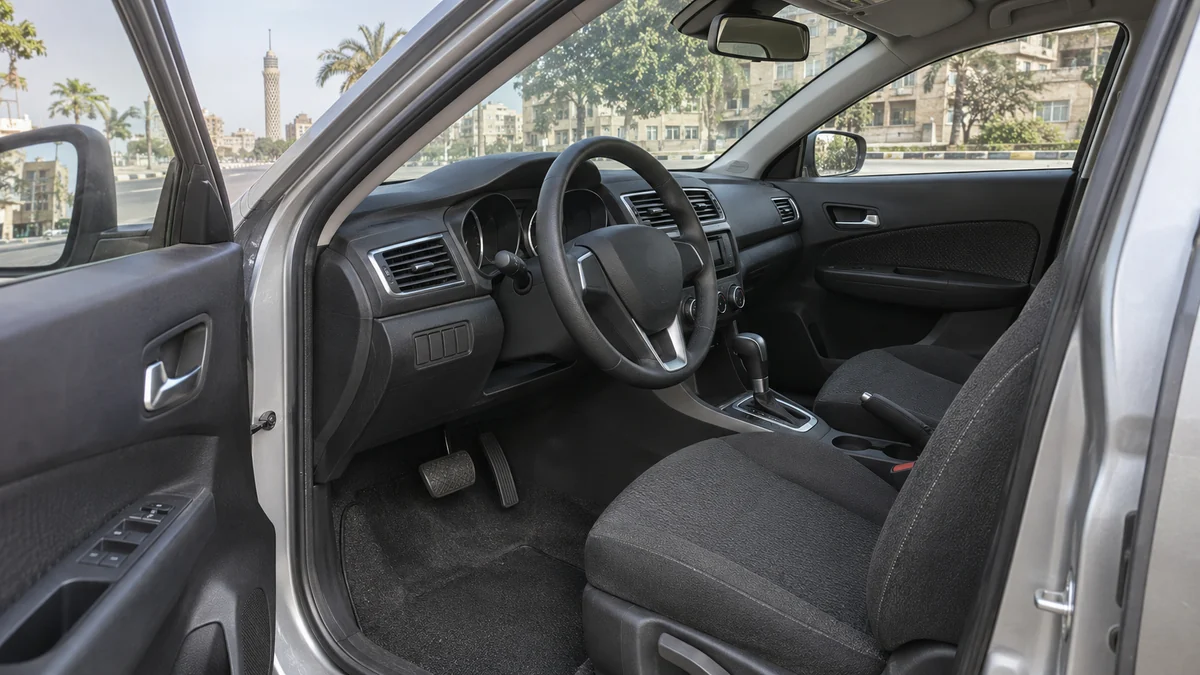
Rent a Mercedes without a driver: check the actual seat and equipment
If you want to rent a Mercedes, first ask whether the proposed car is available for your intended self-drive arrangement and whether the request involving both drivers can be accepted. A catalogue listing is useful for discussing preferences, but it does not confirm the allocation of a model, trim or year to your booking.
Mercedes is a marque, so identify whether the proposed car is a sedan or an SUV rather than treating the name as another body category. Then consider the driving position in that car. Ask how its seat and mirrors adjust and where to find the instructions for its controls. Do not assume memory settings, powered adjustment or another feature from the badge or an illustration. Each accepted driver needs a workable position; a setting that suits one person does not establish that it suits the other.
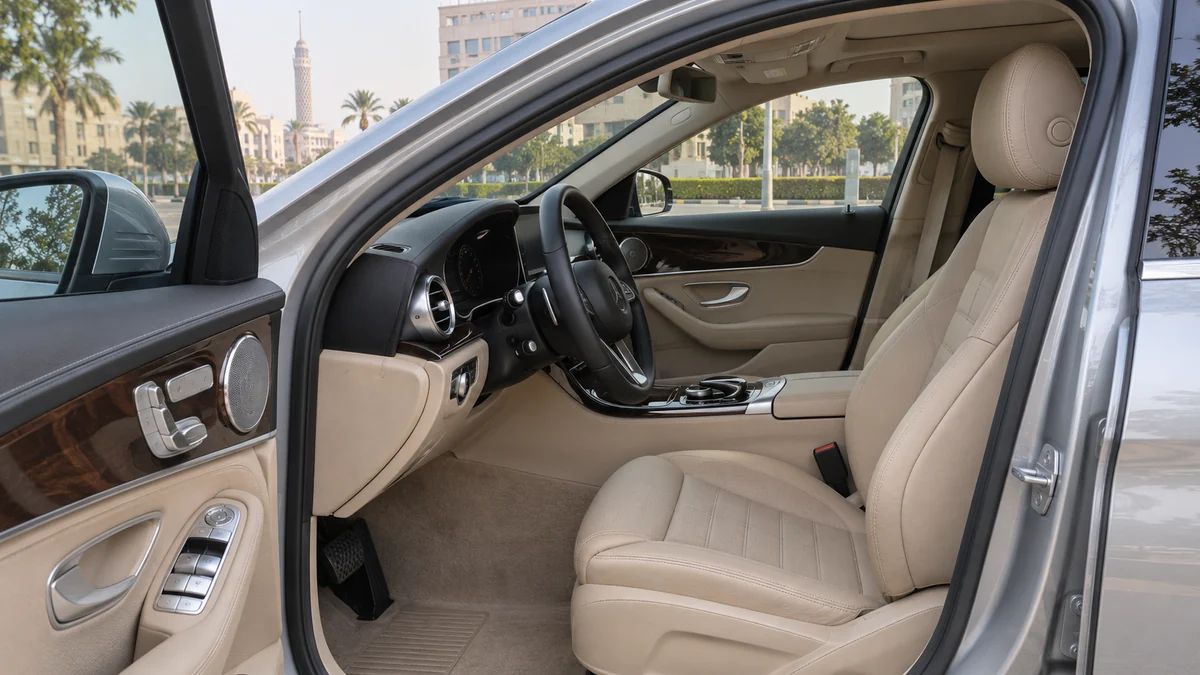
SUV rental: judge height and size from the driver’s seat
An SUV changes more than the exterior appearance. Look at the step into the actual cabin, the normal seated view and how familiar each proposed driver is with the vehicle’s size. A higher body should not be treated as proof that a car is easier to enter, easier to drive or better suited to every person.
Use the Limousine Cairo car catalogue to identify sedan and SUV categories worth discussing, then request the actual vehicle details. Compare the needs of both people without inventing dimensions or inferring equipment from the photographs. Ask about any uncertainty in the proposed car rather than assuming that a different category automatically solves it.

Get familiar with the actual car before the journey
Whatever actual vehicle is proposed, ask how to find and understand its controls while it is parked. Depending on the actual car, this may include the gear selector, parking brake, lights or wipers. The purpose is familiarity with the equipment provided, not an assumption that every sedan or SUV uses the same layout or switches.
Use the vehicle’s instructions and ask the responsible person to explain anything unfamiliar. A companion’s experience with another model can help identify a question, but it is not a substitute for understanding this car. If a control or adjustment remains unclear, resolve that issue before moving rather than trying to explore its operation during the journey.
A driver change starts with checking the seat and mirrors while parked
The following planning points apply only if both people have been explicitly accepted for the actual booking. At a driver change, the incoming driver needs to prepare their own normal position while the car is suitably parked. The outgoing person’s seat position, mirror view or reach to controls may not work for the person taking over.
Follow the actual vehicle’s instructions, including normal restraint use, and allow the incoming driver to establish a clear view before moving. There is no universal electronic memory function or adjustment sequence to assume. Keep belongings out of the way of the driver’s working space, and do not treat a quick seat swap as proof that the new position has been checked.
Plan driver changes at a suitable stopping place
If shared driving has been confirmed, include a suitable permitted stopping place in the itinerary rather than deciding to swap wherever the current journey happens to pause. Consider passengers, belongings and the time needed for the incoming driver to get settled. No fixed driving interval or road-specific stopping arrangement is prescribed by this guide.
If the intended route or use matters to the booking, describe it to customer service and ask about the relevant terms. Do not interpret self-drive as unrestricted use of any road or destination. The travel programme should fit both the confirmed use of the vehicle and the people accepted to drive it, rather than relying on assumptions discovered after departure.
Having the key does not confirm who may drive
Passing a key between companions is a personal action; it does not update the provider’s confirmation. Keep the accepted driving arrangement separate from who happens to hold the key or coordinate the journey. The number or type of keys supplied is also a booking detail, not something to infer from an example or photograph.
Make sure the people involved can refer to the latest confirmation and contact customer service if a question arises. This is especially useful when the person arranging messages is elsewhere. Avoid letting an informal instruction from a friend replace the answer that was actually given about the car and the proposed drivers.
If the proposed driver changes after the rental starts
Contact the team before relying on a new person driving. Describe the proposed change and ask whether it can be accepted for the current booking, what is needed and how any updated arrangement would be confirmed. A sent message or unanswered request does not establish acceptance, and this guide cannot supply an approval time or outcome.
If the change remains unconfirmed, reconsider the journey with the existing accepted arrangement. Be specific about what needs to change in the programme instead of treating an unresolved request as a minor administrative detail. Do the same when the intended person changes completely: acceptance discussed for one proposed person does not answer a question about somebody else.
Returning the rental car: agree who will bring it back
Explain who intends to drive the car to the return point and who will speak with the receiving representative. If someone different from the original driver is proposed, raise that before the return day and ask what can be accepted. A return journey still involves driving; the fact that the rental is ending does not settle the person’s involvement.
The guide to returning a self-drive rental car covers the vehicle handover and follow-up. Use it alongside the confirmed arrangement for the people involved. Keep the agreed return date, location and contact details clear, and distinguish an intended change from a reply actually confirming it.

When one person drives and another coordinates the return
A companion may be helping with messages or meeting the representative while another person drives. Describe those roles separately so customer service can explain what is required. Do not assume that coordinating the appointment also means completing every part of the vehicle handover on someone else’s behalf.
Ask how the completed arrangements and any outstanding points will be recorded for the booking. Keep the confirmation available to the person responsible for following up. The presence of a companion or possession of the key does not establish a particular financial outcome, the completion of every procedure or a change to the original agreement.
Hypothetical example: two people with an unconfirmed shared-driving plan
This is a planning example, not a customer case or a statement of current company policy. Two adults are preparing a self-drive trip. Initially, only one person has been accepted to drive; the second is proposed later. Before allocating different journeys between them, they ask whether that person can be accepted for the actual booking and how the answer would be recorded.
They also compare actual sedan and SUV options, including any proposed Mercedes, for access, normal driving position and visibility for both people. Checking the car does not replace the acceptance question. If the second person remains unconfirmed, they adapt their programme around the accepted driver instead of assuming they can alternate. They clarify collection and return roles separately, so neither stage relies on an unanswered request.
Compare the driving arrangements before choosing the car
The distinction below helps separate what is confirmed about the people from what still needs checking about the vehicle. The last row is conditional; it is not an example of approval already granted by Limousine Cairo.
On a narrow screen, swipe across the table to read every column
| Current position | Car questions | Next confirmation |
|---|---|---|
| One person confirmed to drive | Does the actual car suit that person and the journey? | Confirm collection and return roles for that person |
| Two people proposed; acceptance unresolved | Which actual vehicle would suit both if the request is accepted? | Ask whether each person can be accepted and how this is recorded |
| Both people explicitly accepted for the actual booking | Can each establish a suitable driving position and understand the controls? | Confirm collection, return and any later changes that affect the arrangement |
Prepare a car rental enquiry in Egypt around who will drive
Send the intended dates, use of the car and preferred category, then explain that two people are proposed to drive. Identify the person making the enquiry, the proposed collector and the intended return arrangement. Ask what can be accepted, what the team requires from each person and how the actual vehicle and terms will be confirmed.
Contact Limousine Cairo on WhatsApp or call 01118974446, 01118974448 or 01118964445. The website is a car catalogue; booking enquiries are handled by phone or WhatsApp. Keep the initial message focused on the request, and ask which route to use for any personal documents required.
You could begin: “We would like to ask whether two people can be accepted to drive for the requested rental period. One of us would collect the car, and we would like to ask about the other returning it. What needs reviewing before this plan can be confirmed?” This is an enquiry, not acceptance. After the reply, identify any outstanding person, attendance or car question separately.
Read the confirmation for the people, car and rental period
Read the reply against the request you actually made: the people accepted to drive, the car proposed, the relevant dates and use, and the collection and return roles. Identify any unanswered point directly. A general response about vehicle availability should not be treated as an answer to a separate question about a second person.
If the person or actual car changes, ask which part of the previous confirmation still applies and what needs reviewing. Keep the most recent agreed summary rather than relying on isolated messages from different stages. The aim is a travel plan built around clear current information, without substituting a companion’s expectations for the provider’s answer.
Conclusion
Before you rent a car in Egypt for a shared-driving plan, ask whether the second proposed person can be accepted for the actual booking. Compare a car that suits both people only alongside that answer, then clarify who collects, drives and returns it. If a part of the arrangement remains unresolved, adjust the programme before relying on it.
Frequently asked questions
Can I assume my partner or friend can drive the rental car?
No automatic acceptance should be inferred from the relationship. Ask whether that proposed person can be accepted for the actual booking and how any agreement will be confirmed before relying on them driving.
Must the person making the booking also collect and drive the car?
Explain the proposed roles to customer service rather than assuming a universal rule. Ask who needs to attend and what can be accepted for collection and driving in your particular arrangement.
Is sending the second driver’s details after collection enough?
Sending information does not establish acceptance. Ask about the current process before assuming shared driving, and wait for a clear answer about the person and the actual booking.
How do we choose a sedan or SUV, including a Mercedes, for two different drivers?
First ask about acceptance, then assess the actual proposed car for both people’s normal seating, reach to controls, mirror view and visibility. A category or brand does not guarantee a suitable position.
Can someone else return the car for me?
Confirm who would drive it back and who would complete the return arrangements separately. Another person holding the key or organising messages does not by itself settle either role.