Wedding Car Rental in Egypt: Plan Seating for a Full Bridal Gown
A wedding car can look spacious from outside and still be awkward to enter in a full bridal gown. The useful question is not simply whether a dress will fit on the rear seat. It is whether the bride can reach that seat, settle into a normal travelling position, use the seat belt correctly and get out again without fabric obstructing the doors or other passengers.
For wedding car rental in Egypt, start with the gown’s shape and the actual vehicle proposed for your date. This guide focuses on that practical fit check. For the wider decision about the occasion, vehicle presentation and booking requirements, use our guide to choosing a wedding or engagement car in Cairo. A photograph or model name is a starting point for an enquiry, rather than confirmation of a suitable car.
Start with the gown, not the car photograph
Describe the gown as it will be worn during the journey. A fitted dress with a long train creates a different problem from a broad skirt with a firm underskirt, even if both look similarly dramatic in a standing photograph. Ask the bridal professional how the fabric and structure can be arranged for sitting, and explain those practical limits when discussing the vehicle.
Keep the conversation specific. Does the skirt compress naturally, or does its shape resist folding? Is a train designed to detach, or must it remain attached? Which parts require careful support? These questions help establish what needs checking in the car. They do not establish vehicle dimensions or justify changing a dress’s structure without advice from its maker.
Skirt, train and volume when seated
The gown’s outline while standing does not show its occupied space once seated. Fabric may spread towards a neighbouring seat, collect beside the door or gather around the feet. Consider the train separately from the skirt: a long but flexible train may be arranged differently from a structured underskirt. Avoid using a catalogue image to estimate how either will behave.
Discuss a travelling arrangement during a fitting where possible. If a train or overskirt was designed to be removable, ask how and when that feature should be used. Do not cut, force, pin or dismantle unfamiliar parts merely to fit a preferred vehicle. Bring the resulting requirements to the car discussion, including anything that must remain in its normal shape.
Accessories, cover and small bag
A veil, headpiece, bouquet and small bag affect boarding even when they occupy little seat space. Decide which items travel with the bride and which a companion will carry. A protective cover can be useful only if it is suitable for the gown and does not interfere with sitting, visibility, access or the restraint system; confirm its use with the bridal professional.
Separate personal belongings from the dress arrangement. Do not assume that empty-looking areas in a photograph are storage spaces, or plan to put loose objects beside controls and door mechanisms. Ask what can be carried and where it can be placed in the actual car. A short list makes the fit discussion clearer than describing everything as wedding accessories.
Check the full route into the wedding car
Think of boarding as a route rather than a single movement. The bride approaches the vehicle, passes through the doorway, reaches the designated seat and settles into position. A generous-looking seat cannot compensate for an unsuitable doorway or an awkward movement between the opening and that seat. Review the route with the vehicle stationary and in a suitable permitted place.
The pickup location also matters. There must be a practical place to approach the passenger door without relying on an unsafe roadside manoeuvre. Our wedding-car venue access guide covers the separate question of the vehicle reaching the venue. Here, concentrate on the bride’s final approach from the building to the seat, including any relevant steps or narrow pavement.
Door opening, roof edge and seat edge
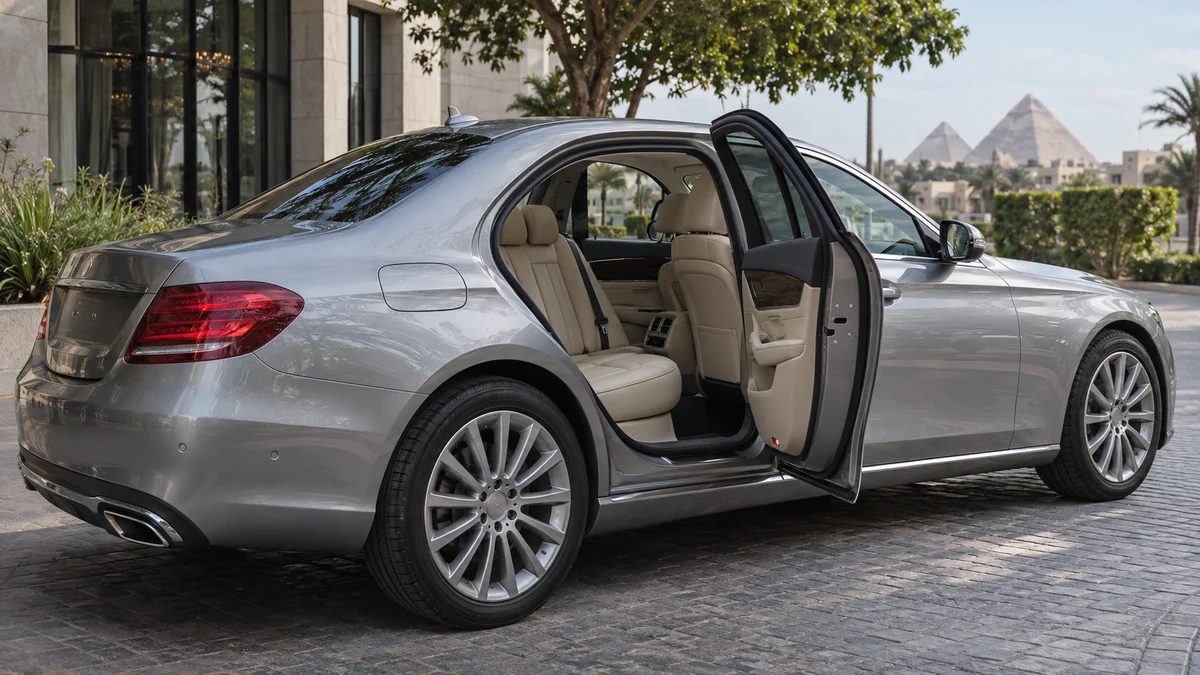
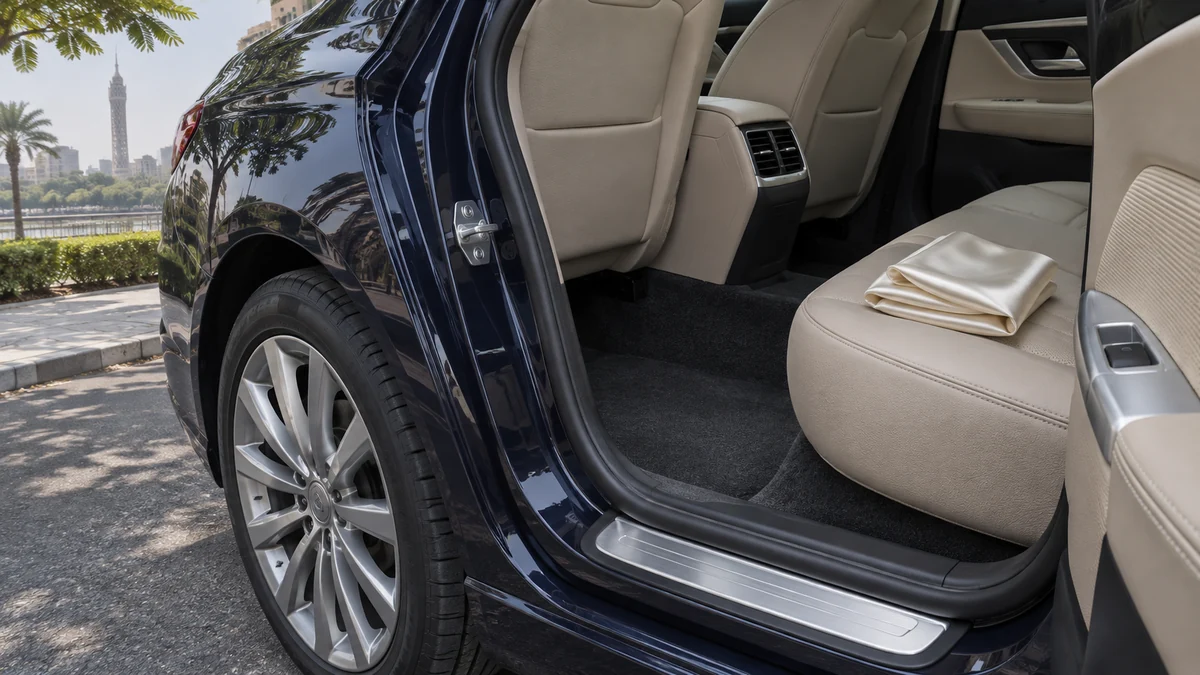
Inspect the opening as it will actually be used. Consider the roof edge, the door’s position, the sill and the edge of the seat together. Ask where delicate fabric might brush a surface and whether the bride can move through the opening comfortably. Do not force the door beyond its normal movement or treat a partly closed door as a solution.
Before any journey starts, everyone must be properly seated and the doors closed normally. Fabric should not be trapped in the closure or left hanging outside. If the intended arrangement depends on keeping a door open, changing the seating position or continually holding fabric away from a mechanism, return to the vehicle choice instead of trying to improvise around the problem.
A companion’s role while boarding
Agree who will help organise the fabric while the car is stopped. A trusted adult who understands the gown can coordinate with the bride and the person responsible for the vehicle. Clarify whether that companion will also travel. Assistance at pickup should not be confused with an additional service automatically included in the transport booking.
Keep instructions simple and avoid several people pulling different parts of the dress at once. The companion should know what can be lifted or rearranged and what should be left alone. If personal assistance is needed beyond arranging fabric, discuss that requirement separately rather than assuming that a driver or a particular vehicle category provides it.
Gown space once everyone is seated
Judge the final arrangement with the intended passengers in their actual seats. The bride needs a normal seated position, usable foot space and access to the seat belt. A companion needs their own suitable seat rather than whatever space remains around the gown. Fabric should not obstruct another occupant’s restraint, door access or movement needed to leave the car.
Repeat the check after all belongings have been placed. A bouquet or garment bag added at the last moment can change an arrangement that initially seemed manageable. If there is a conflict, remove unnecessary belongings from that part of the plan or consider a different confirmed vehicle. Do not resolve a space problem by turning an occupied seat into informal luggage storage.
Normal seated posture and seat-belt fit
The NHTSA guidance on wearing a seat belt places the shoulder belt across the middle of the chest and the lap belt across the hips, rather than the stomach. It says not to route the shoulder belt behind the back or under an arm. Follow the instructions for the actual vehicle; this is a general safety reference, not a statement of Egyptian legal requirements.
A gown should be arranged around normal seated travel, not used to justify bypassing a restraint. If the dress prevents an appropriate arrangement, discuss a different dress arrangement with its professional and a different vehicle with customer service before confirming the booking. Resolve any doubt about the travelling arrangement before the journey rather than accepting a photographic pose as evidence that the gown fits.
Companion and belongings
Tell customer service who will travel on each part of the journey. The person helping at the first pickup may not be the person travelling to the venue, and the return party may be different again. The seating check should reflect the actual travelling group, rather than a photograph of the bride alone in the rear seat.
Allocate a responsible person for the gown’s cover, personal bag and any item removed before boarding. Keep them accessible through a planned handover at the destination. Do not assume the car is a wardrobe or an unattended storage service between journeys. Ask about anything that needs to remain with the vehicle, and wait for a specific answer for that booking.
Rent a Mercedes for the wedding: inspect the actual car
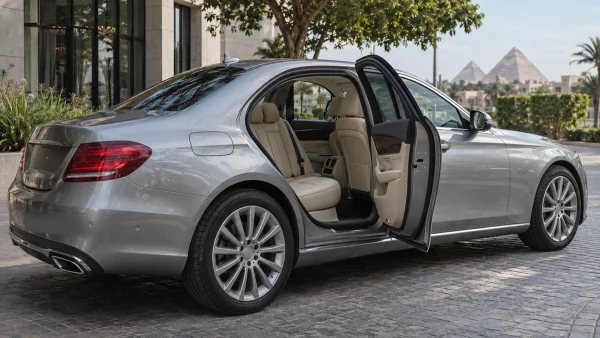
If you prefer to rent a Mercedes, request details of the proposed car and inspect the relevant passenger space rather than relying on the badge. The model, body style and actual configuration matter to the boarding route. A previous experience in another Mercedes is useful background, but it does not confirm how this particular vehicle suits the gown.
Ask for a clear view of the passenger doorway and seating area. Use images to identify questions, then discuss whether a suitable viewing or rehearsal can be arranged. Neither an illustration nor a catalogue listing confirms date-specific availability. The wedding car and limousine service is the relevant service enquiry route; agree the actual vehicle and arrangements with customer service.
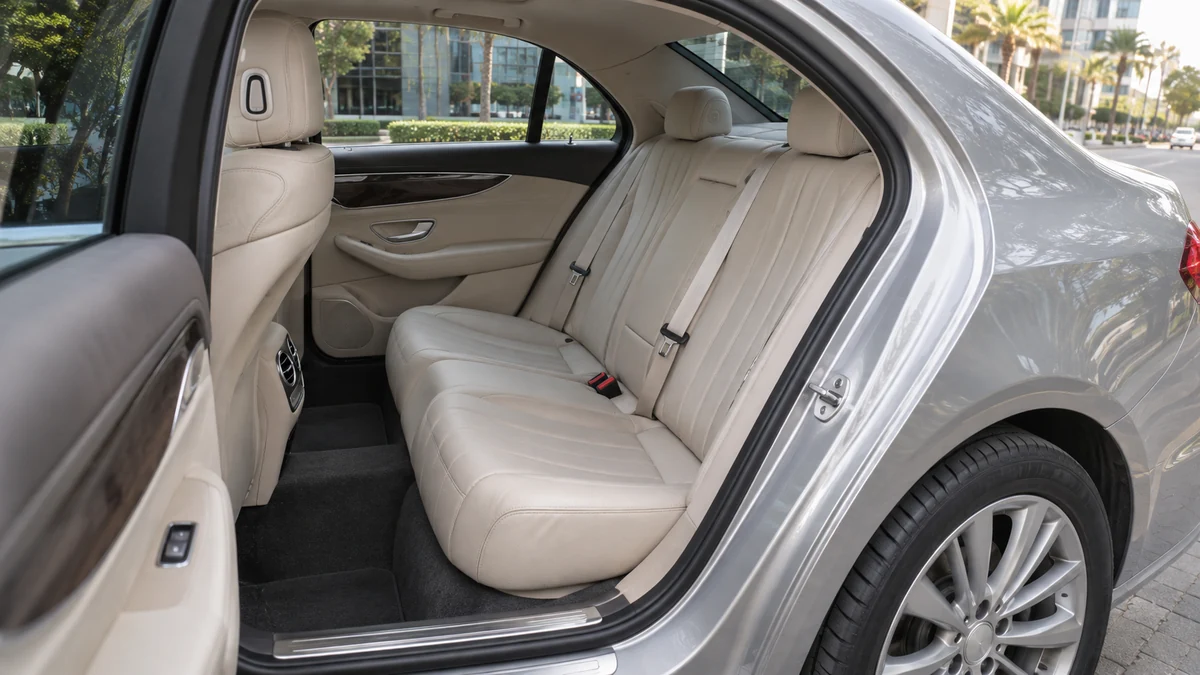
Executive sedan or a larger car?
A sedan may be worth checking when the gown can be arranged within its actual rear passenger space. A larger-looking body is not automatically easier to enter, while a familiar executive model is not automatically suitable for a full skirt. Compare the opening, the route to the seat and the completed seated arrangement before choosing between categories.
Keep the decision practical rather than competitive. One car may suit the intended pickup location while another suits the dress arrangement more comfortably. Identify the unresolved point and ask whether it can be checked. If neither option supports normal seated travel, continue the comparison instead of choosing whichever photograph appears more prestigious.
Stretch limousine rental and a full gown
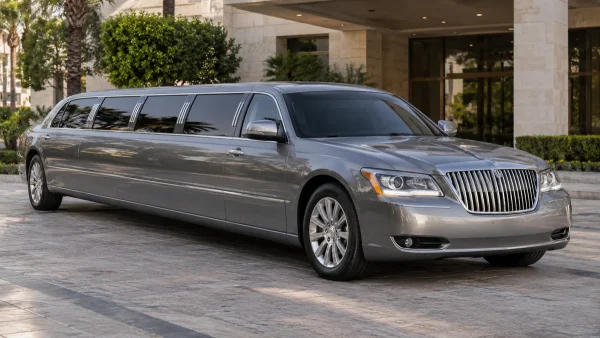
A stretch limousine’s long exterior can create the impression that gown space is settled. In practice, the entry route and seating layout still need inspection. The doorway, interior route and chosen passenger position form one connected question. Do not infer an easy boarding movement or a particular seating arrangement from the word stretch.
Discuss where the bride would sit and how she would reach that position with the gown arranged for travelling. Ask whether other passengers would already be seated, and assess the final layout with their access needs included. A spacious-looking cabin is useful only when the entry route and actual passenger arrangement work together for this booking.
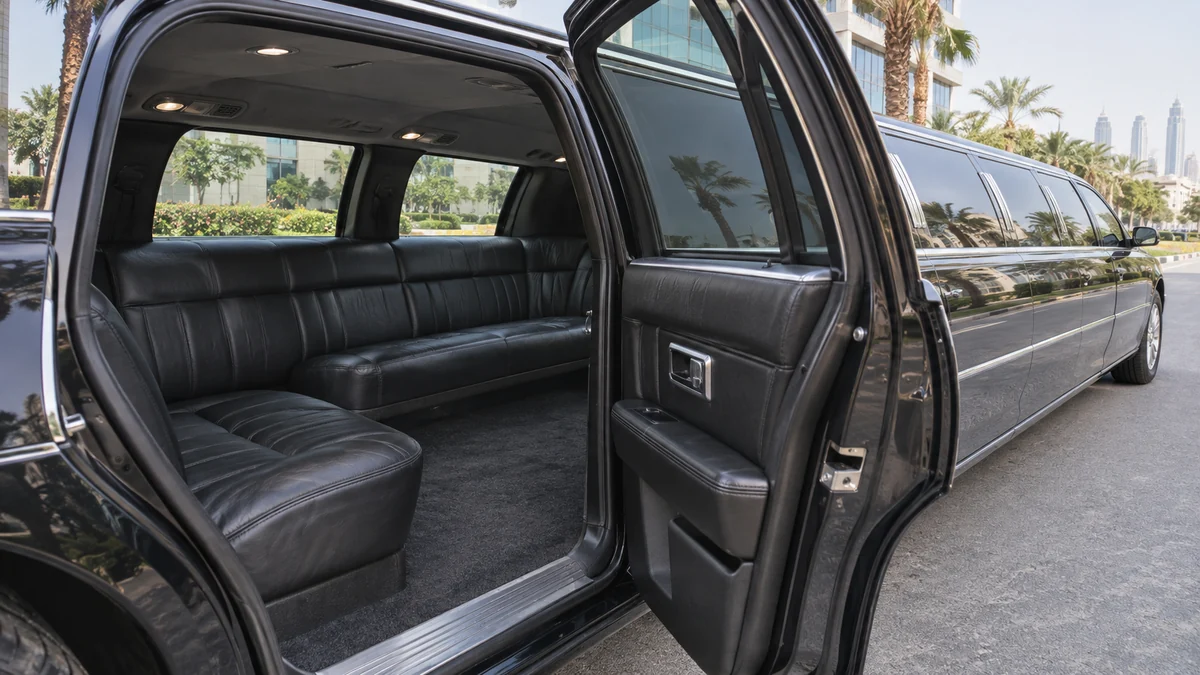
Entry, aisle and seating layout
Where an internal aisle or an indirect route is involved, check it rather than assuming the bride can move across the cabin in a structured gown. Identify any point where fabric might obstruct the path. Do not plan to climb over seats or use a surface that is not a designated passenger seat.
Consider getting out as carefully as getting in. The destination may offer a different approach, and the companion helping with the gown may need a clear position beside the doorway. A rehearsal should cover the complete exit sequence while stopped, including retrieving the fabric before anyone closes the door.
Convertible wedding car rental: gown and roof
Discuss a convertible only after its actual availability and suitability have been confirmed. An open roof is not a substitute for adequate passenger space or an appropriate seated position. The gown still needs to remain within a workable arrangement, and any other passenger needs their own suitable seat and restraint.
Our convertible rear-seat, roof and luggage guide explains the broader fit questions. For a full gown, add the movement of light fabric and the practical closed-roof arrangement. Do not assume a roof can be operated around fabric or accessories without following the actual car’s instructions.
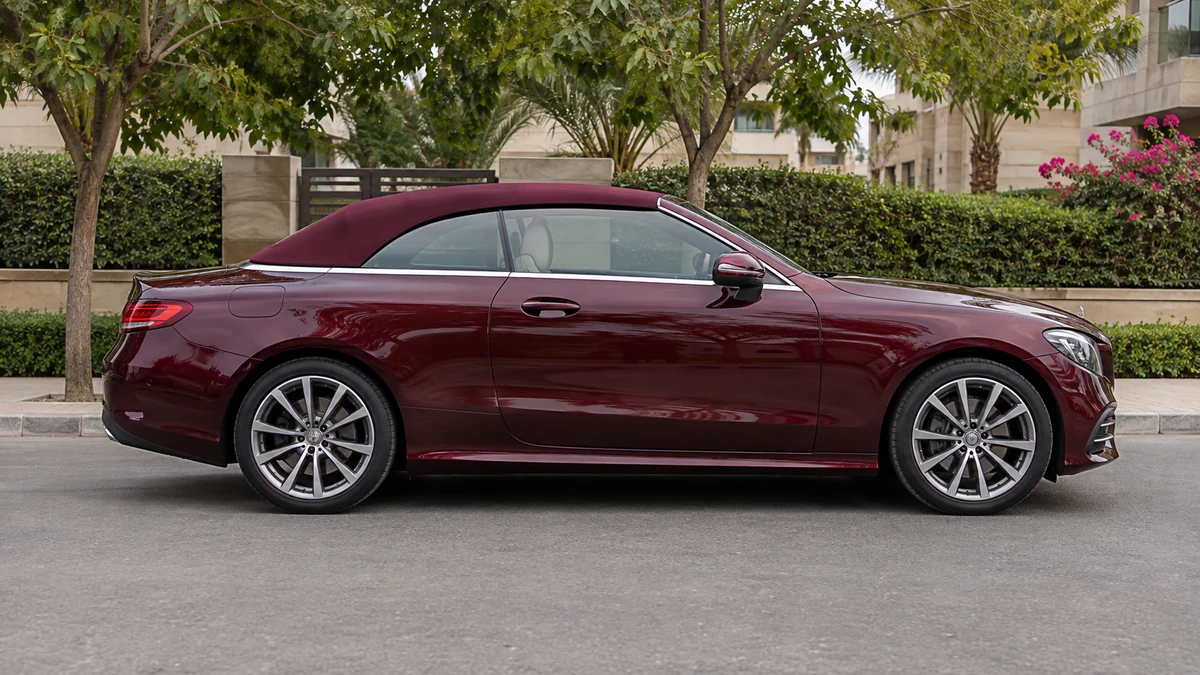
Photographs, airflow and a closed-roof plan
A stationary photograph and a road journey are different arrangements. Airflow can affect loose fabric and accessories, so do not base the travelling plan on how the dress looks while the car is parked. Discuss the intended use and a workable alternative for unsuitable weather or an unmanageable fabric arrangement.
Confirm that any proposed closed-roof plan also fits the bride and gown normally. If it does not, choosing an open roof has not resolved the underlying vehicle decision. Coordinate photographs separately with the venue and photographer where relevant, without assuming access permission or treating a photographic pose as a suitable way to travel.
Practical comparison table
Use this comparison to choose what to inspect, not to declare one category suitable for every gown. The actual vehicle and the actual travelling arrangement decide the result.
Swipe horizontally to compare all columns.
| Category | Priority check | Do not assume |
|---|---|---|
| Executive sedan | Door opening and gown space in a normal rear-seat position | A model name proves the fit |
| Larger car, if confirmed | Step into the cabin and the actual seat height | A larger body automatically makes the movement easier |
| Stretch limousine | Entry route, interior path and designated seating position | A long body guarantees easy boarding |
| Convertible, if confirmed | Passenger fit, fabric control and a workable closed-roof plan | An open roof fixes a space problem |
A boarding rehearsal before confirmation
Ask whether an appropriate rehearsal or viewing can be arranged; do not assume it is automatically provided. If possible, use the gown or a representation agreed with the bridal professional, the intended shoes and the relevant accessories. Explain any practical limitation in advance so the discussion remains useful.
Review approaching, entering, sitting, fastening the restraint and leaving. Include the companion and planned belongings, then record the actual car and the arrangement that was checked. A successful stationary rehearsal helps resolve fit questions; it does not guarantee traffic conditions, venue access or an unchanged wedding-day schedule.
Changes after the rehearsal
If the gown, underskirt, accessories, travelling passengers or vehicle changes, identify whether the original check still applies. Ask for a renewed assessment of the affected point. A substitute vehicle should not be assumed equivalent simply because it belongs to the same brand or category.
Keep the latest confirmed arrangement in one message. If a change cannot be checked, explain the uncertainty and discuss a workable alternative before relying on it. Avoid leaving a known fit problem for the pickup, when the bride is already dressed and the rest of the day is moving around the departure.
Hypothetical example with a detachable train
This is a planning example, not a customer account. A bride has a full skirt and a train designed to detach, and will travel with the groom and an adult companion. Her bridal professional confirms how the removable part should be handled. The group discusses an actual sedan and a stretch limousine rather than selecting from exterior photographs.
They compare boarding, normal seating and the companion’s position with the agreed dress arrangement. They do not assume the stretch is easier or that the detachable train solves the skirt’s volume. The decision follows the practical check; if neither option works, they reconsider the vehicle or seek a professionally approved dress arrangement rather than improvising at pickup.
Wedding car rental enquiry brief in Egypt
Send the date, pickup and destination, intended passengers, preferred category and a short description of the gown’s seated requirements. State whether a detachable part has been confirmed by the bridal professional and whether a viewing or rehearsal is requested. Ask what can actually be confirmed for the vehicle, route and any waiting arrangement.
Contact Limousine Cairo on WhatsApp or call 01118974446, 01118974448 or 01118964445. The website is a car catalogue; enquiries and booking confirmation are handled by telephone or WhatsApp. Sending a dress photograph or an enquiry does not confirm a vehicle booking.
Conclusion
For a full bridal gown, choose wedding car rental around the complete boarding and seated arrangement. Check the actual doorway, passenger position, restraint and exit, then compare sedan, stretch or a confirmed convertible accordingly. Keep the gown professional’s advice separate from the transport agreement, and reconfirm any change that affects the arrangement you assessed.
Frequently asked questions
Is a brand or model name enough to choose the wedding car?
No. Ask about the actual car and review its doorway, seating position and the gown’s travelling arrangement. A familiar badge or an exterior photograph does not establish a suitable fit.
Do I need a rehearsal with the actual gown?
Ask whether a suitable viewing or rehearsal can be arranged. Where the actual gown cannot be used, discuss a useful representation with its professional, and record what the check could and could not establish.
Is a stretch limousine automatically easier with a full skirt?
No. Its doorway, interior route and designated seat still matter. Compare the complete boarding and exit sequence instead of assuming that the long exterior guarantees an easier arrangement.
Can an open convertible roof solve the space problem?
No. Appropriate seating and restraint use remain necessary, and loose fabric needs a workable arrangement. Consider a convertible only if confirmed and suitable, including a viable closed-roof alternative.
What if the vehicle changes after the rehearsal?
Ask which parts of the original assessment remain valid and recheck anything affected. Do the same when the gown or passenger group changes; a replacement in the same category is not proof of an identical fit.