
Car Rental with a Driver for Cairo Train Stations: Pickup and Drop-off Guide
Your train has arrived, but the next part of the journey may still need arranging: collecting the bags, finding the rest of your group and reaching the place where your car can collect you. A clear pickup starts before you travel, with the exact station, arrival date and meeting point.
When arranging car rental with a driver in Egypt, describe the passengers, luggage and any boarding needs alongside the train details. This guide helps you plan pickup after arrival or drop-off before departure, compare the actual sedan or van proposed and prepare your return journey. Confirm the car, meeting arrangement and booking scope with Limousine Cairo customer service for your travel date.
Car rental with a driver starts with the train ticket
Read the station name, travel date, train identification and whether the information describes departure or arrival. Copy those transport details into a concise car enquiry. If someone bought the ticket for you, obtain the current journey information rather than working from a message saying only that the family is coming to Cairo. Check the final itinerary again after any amendment.
Share the minimum information needed to understand the journey. A full ticket image may contain a barcode, booking reference or personal information unrelated to the car arrangement. A typed summary of the station, date and rail arrival or departure details can explain the transport request without circulating the entire ticket. Keep the original ticket available for its intended rail use.
The exact station matters more than “Cairo train”
Do not use a city name as a substitute for the station printed on the ticket. The official Presidency project page identifies the Upper Egypt Railway Station in the Beshtil area of Giza. Do not treat it and Ramses as interchangeable descriptions. The existence and naming of a station do not establish which station your particular train uses. Read the current ticket and clarify an ambiguous location with the rail operator before arranging the car.
Distinguish the station itself from a convenient map result for a nearby square or street. If different names appear in your messages, resolve them before confirming the transport request. Once the actual station is clear, discuss a permitted external meeting point relevant to that location. Avoid inventing an entrance number or selecting a pickup point simply because it appears closest on a map.

Travel date and arrival date may differ
For an overnight journey, the date you board the train may differ from the date you arrive. Use the actual itinerary to separate those dates, then state the car journey’s local date clearly. The date on a payment confirmation or the timestamp of a forwarded message is not a reliable substitute for the journey details.
If you are booking a station drop-off instead, work from the train’s departure date and the instructions relevant to that journey. Ask the person arranging the car to repeat the intended date and direction in the booking summary. This simple comparison is particularly useful when a relative coordinates several journeys and forwards information from separate tickets in one conversation.
A car from the train station or a drop-off before departure?
State the direction before discussing a vehicle. For pickup after a train journey, the car request begins at a permitted meeting location near the confirmed station. For travel to catch a train, it begins at your home, hotel or another agreed address. “A car for the station” does not tell customer service which of those journeys you mean.
Explain the endpoint too. A rail arrival followed by a hotel transfer is different from a station pickup followed by several visits. Ask about the car rental with a driver service using your actual route. Discuss any additional stop as part of that request rather than assuming that waiting, a second destination or a later return is included.
After the train arrives: gather the group and bags
The train reaching its station does not mean the travelling group is already at an outdoor pickup point. Passengers need to leave the train, gather their belongings, regroup and reach the agreed public meeting area. The order and practical difficulty of those steps depend on the actual journey and the group’s needs; there is no single exit-time estimate appropriate for everyone.
Agree what update customer service needs when the group is ready and who sends it. Avoid asking the vehicle to move towards an unclear location while passengers are still deciding where to emerge. A message that the train has arrived and a message that everyone is together at the agreed place convey different information. Make that distinction explicit in the contact plan.
Station drop-off happens before boarding the train
When travelling to the station, separate the car’s arrival from the remaining rail steps. Passengers still need to unload their belongings, reach the permitted pedestrian approach and follow the rail operator’s boarding instructions. Plan around the actual ticket and your group’s needs, including anyone who walks slowly or needs help managing luggage.
Do not build the departure around an assumed guaranteed connection. Discuss the pickup address and intended journey with customer service, while checking rail attendance requirements with the operator. If your plans change, update both arrangements through the appropriate channels. A car booking is not a train-ticket amendment, and the driver cannot determine the railway’s boarding procedures.
Limousine rental for the station: agree a clear meeting point
A useful meeting description identifies the confirmed station, the relevant public side or approach and a recognisable feature that passengers can actually reach. It should also distinguish where people gather from where the vehicle may stop. A building entrance visible on a map does not establish permission to park beside it or enter a controlled area.
Ask how the proposed meeting works on the day and follow instructions from the responsible staff at the location. Keep an alternative communication step if the intended point cannot be used. This is an agreement about a permitted external meeting, not a promise of platform entry, a reserved station space or a reception service inside the station. Confirm any requested additional assistance separately.
Check the walk with luggage to the boarding point
Consider the whole group’s route from the public exit to the proposed car location. Bags that were manageable inside the train may become awkward when carried across an outdoor approach. Check actual walking conditions and any relevant steps or crossings rather than assuming that a short line on a map means an easy walk.
Explain access needs before choosing the vehicle and meeting arrangement. The guide to car access and comfort for older passengers helps frame questions about getting into and out of a car. It does not establish specialist assistance or station facilities. Discuss the needs of the real passenger without sharing medical information unrelated to the transport request.
If passengers emerge on different sides
Choose one coordinator for the group and an agreed public regrouping point. If relatives leave through different approaches, establish where everyone is before sending a new pickup instruction. Several people directing the same car from separate locations can create a moving target even when each person describes their own position accurately.
Do not search through restricted areas or ask the vehicle to stop somewhere unsuitable merely to shorten the walk. Keep the group’s contact person informed, then clarify a permitted arrangement with customer service. If a passenger needs to travel separately, discuss that change explicitly instead of treating it as an automatic extra collection within the original booking.
Sedan rental after a train journey: passengers and bags together
Describe every traveller and the actual luggage before asking whether a sedan is suitable. Include the shape of large or rigid cases, smaller bags that need to remain accessible and any folded item such as a pushchair. Space available in a train carriage does not establish what will fit in the boot of a particular passenger car.
Consider the luggage opening as well as the enclosed space. A bulky item may need a different loading movement from several soft bags. Avoid assuming that luggage can occupy a passenger’s seat or obstruct normal seating. Discuss the proposed actual vehicle with customer service and request confirmation of the arrangement that accommodates both people and belongings.
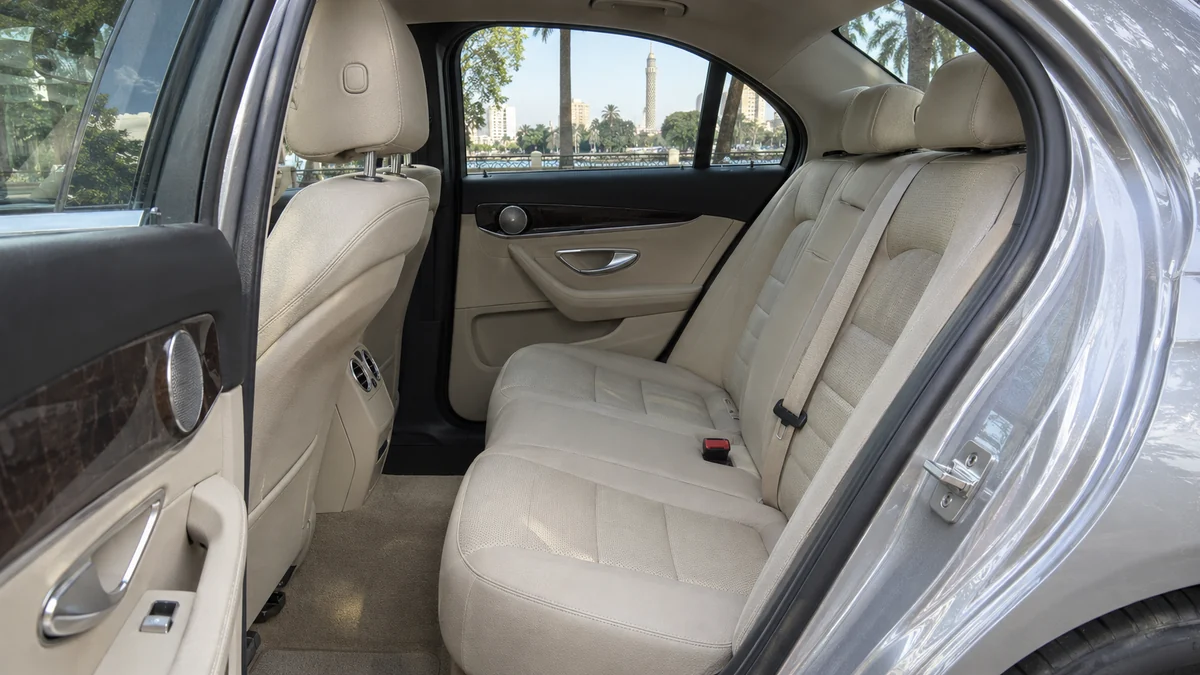
Rent a Mercedes with a driver: assess the actual car
If you prefer to rent a Mercedes with a driver, make that preference part of the enquiry alongside luggage and access requirements. Ask which actual car can be proposed and how its passenger doorway and luggage opening suit the group. A brand or model name alone does not settle usable space or how comfortably someone can reach the rear seat.
Do not infer a model year, equipment package or particular capacity from an illustration. The important comparison is between the confirmed car and the journey’s needs. If there is an unresolved bag or boarding requirement, identify it directly rather than choosing a more prestigious-looking photograph and leaving that question for the station pickup.
Van rental for a station when the group brings luggage
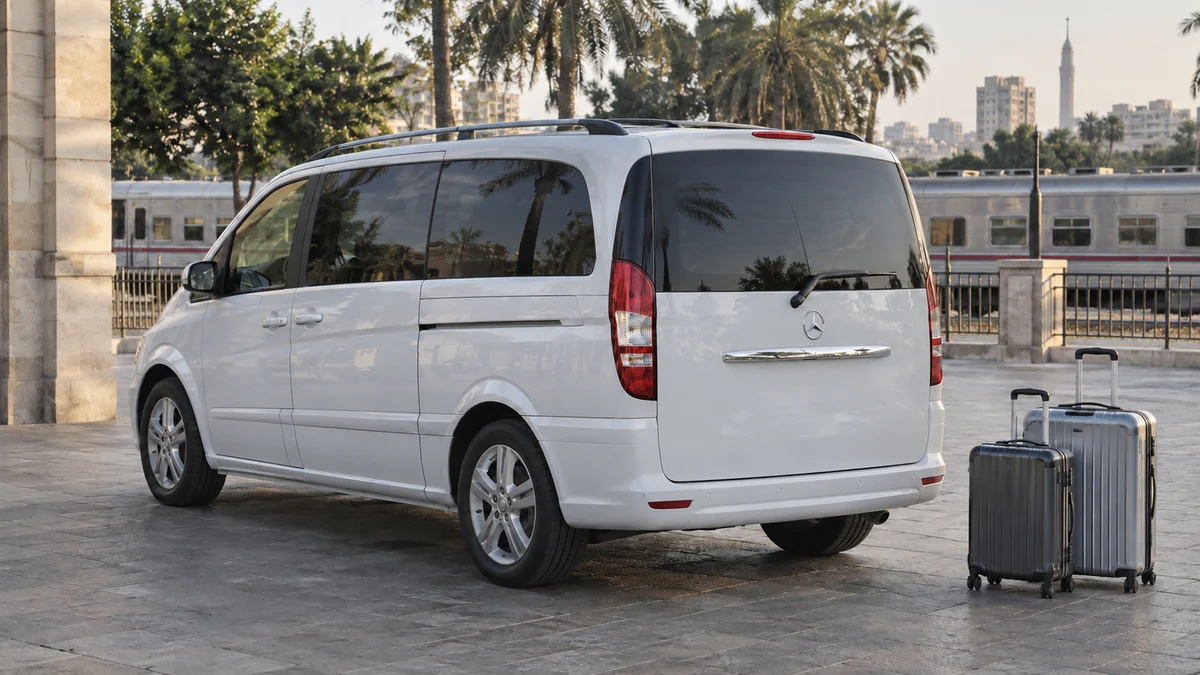
A van is a category to discuss when the travelling group and its belongings need a different arrangement. Tell customer service about all occupied seats and the full luggage list, then ask how the proposed vehicle would be arranged. A large exterior or a general category label does not prove that every seat and every bag can be accommodated together.
Check the loading approach and the passengers’ route into their seats. Do not assume that a seat can be removed, folded or rearranged for your booking without confirmation. Explain anything that must stay accessible during the road journey, and keep that need separate from the main luggage storage. Confirm the actual configuration before relying on it.
Count bags before loading and before leaving the car
Give someone in the travelling party responsibility for checking the bag list when leaving the train, again at the car and finally at the road destination. Count items rather than relying on the impression that the luggage pile looks complete. Include small bags carried separately from the main cases, particularly when relatives have divided them between themselves.
Keep personal valuables under your own control and discuss any handling requirement directly. A transport enquiry does not establish a porter service or custody of belongings inside the station. At the destination, compare the unloaded items with your own list before the group disperses. If something is missing, first distinguish an item never brought to the car from one left inside it.
If the train is delayed or the station changes, update the car request
Use the latest information supplied by the rail operator, then explain the exact change to customer service through the agreed contact route. Identify whether it affects the date, station, rail arrival or departure details, or the passenger group. A clear correction to one booking summary is easier to follow than forwarding several contradictory updates without saying which is current.
Ask what revised car arrangement can be confirmed. Do not assume automatic live train tracking, immediate vehicle availability, unlimited waiting or a change already approved because you sent a message. If the information remains uncertain, say what is known and agree how the next update will be provided. Keep the operator’s rail information distinct from the transport provider’s reply.
Who makes contact when someone else booked?
Identify the person who arranged the car, the passenger travelling and the coordinator who will communicate on the day. Explain which person has the current ticket details and which can answer when the group reaches the public meeting point. Agree a usable contact method rather than assuming that a passenger’s phone will work normally after arrival.
Where language affects the arrangement, state what help is needed and confirm what can be provided. Our guide to arranging a car for a non-Arabic-speaking guest explains this distinction. A written meeting description and agreed contact person can help, but do not assume a particular driver language, free roaming or access to a stranger’s phone.
The return car journey needs its own rail details
Read the return ticket independently. The station, local date, travelling passengers or luggage may differ from the outward journey. Do not copy the original pickup location into the return enquiry merely because the family is travelling between the same cities. Compare the railway endpoint printed on each itinerary before discussing the two car journeys.
State where the return car begins and where its agreed drop-off ends. If you are requesting a car after a stay in Cairo, include the current collection address and any extra stop that needs consideration. The return should be a clearly described arrangement with its own confirmation, rather than an unspecified promise that the same car will collect the group later.

Agreed waiting or a separate return transfer?
The guide to a transfer or a time-based car booking explains the broader scope question. For a rail journey, clarify the event that triggers each movement and what happens if passengers are not ready. Use this table as a planning prompt, not a statement of fixed inclusions.
On a narrow screen, swipe across the table to read every column
| Request | Information needed | Term to confirm |
|---|---|---|
| Pickup after a train arrival | Actual station, rail details and who confirms the group is ready | How to update the meeting if passengers are delayed |
| Drop-off before train departure | Collection address, station and the passenger’s rail requirements | Agreed car journey endpoint |
| Separate return journey | Return ticket details and the new collection request | Availability and independent confirmation |
Hypothetical example: a family arrives by train and later leaves from another station
This is a planning example, not a completed customer journey or a published train route. Four adults travel with five bags of different sizes and a handbag. Their arrival itinerary identifies station A, while the later departure itinerary identifies station B. They send the two station descriptions separately rather than assuming the return car uses the arrival location.
One adult coordinates the enquiry and asks about actual sedan and van options using the complete passenger and luggage information. The group plans to gather at an agreed public location after leaving the train, then provide the readiness update. They keep the handbag in their own count and reassess the return details before departure. No category capacity or successful connection is assumed from this example.
Prepare your car rental enquiry for a train journey in Egypt
Prepare the direction of travel, the station shown on the actual ticket, the local date, relevant rail details, collection address or destination, passengers, bags and access needs. Identify the day’s coordinator and proposed contact method. Ask about date-specific availability, the actual car, permitted meeting arrangement, journey scope and how amendments are confirmed.
Enquire through Limousine Cairo on WhatsApp or call 01118974446, 01118974448 or 01118964445. The website is a car catalogue; booking enquiries and confirmation are handled by telephone or WhatsApp. Ask customer service to confirm the car and journey details for your travel date.
A final check before the train and before meeting the car
Before boarding the train, keep the confirmed station, local car date, contact person and luggage summary accessible independently of a long message thread. Compare them with the latest ticket. If someone else is coordinating the car, make sure the travelling passenger also understands the agreed public meeting description rather than depending entirely on instructions relayed later.
Before meeting the car, gather the group and check the belongings, current position and latest transport reply. Confirm any change before moving to another approach. The second check concerns what is happening now: passengers and bags ready at the correct location. It complements the earlier ticket check instead of replacing it with an assumption that everyone’s plans stayed the same.
Conclusion
Start with the station and local date on your current ticket, then agree where to meet and who will confirm that the group is ready. Compare the actual sedan or van using the passengers, bags and boarding needs. Read the return ticket separately, and check any changes with customer service before relying on a revised car arrangement.
Frequently asked questions
Is saying Cairo train station enough for pickup?
No. Identify the station from the current ticket or operator confirmation, then agree the permitted external meeting location. A city name alone can leave the actual station and approach unclear.
Will the driver meet me on the train platform?
Do not assume platform access, a porter or reception inside the station. Discuss the actual permitted meeting point and the service scope with customer service, including any assistance you need.
Is the train arrival time the same as the car boarding time?
No. Passengers still need to leave the train, gather belongings and reach the agreed meeting place. Confirm the readiness contact process without relying on a fixed exit-time estimate.
How do I choose between a sedan and a van after the train?
Describe all passengers, actual bag sizes and access needs, then assess the proposed vehicle. Do not infer usable luggage space or a seating arrangement from a category name or photograph.
What if the train time or return station changes?
Send the precise update promptly through the agreed channel and request confirmation of the revised car arrangement. A change to the rail itinerary does not automatically amend the car booking.